What Is Cognitive Behavioral Therapy (CBT)?
When you’re recovering from addiction or mental health struggles, it can sometimes feel like your thoughts are working against you. You want to make better choices, feel better, live better — but your mind keeps replaying old patterns, negative beliefs, and self-doubt. That’s where CBT comes in.
At Invicta Recovery Center, we use CBT, as well as DBT, to help clients identify and change the thinking patterns that fuel substance use and emotional distress. It’s one of the most researched and effective forms of therapy available, and it’s built around practical, real-life results.
If you or someone you care about is ready to start breaking free from old habits and building a healthier mindset, call Invicta Recovery Center today at (626) 669-6547.
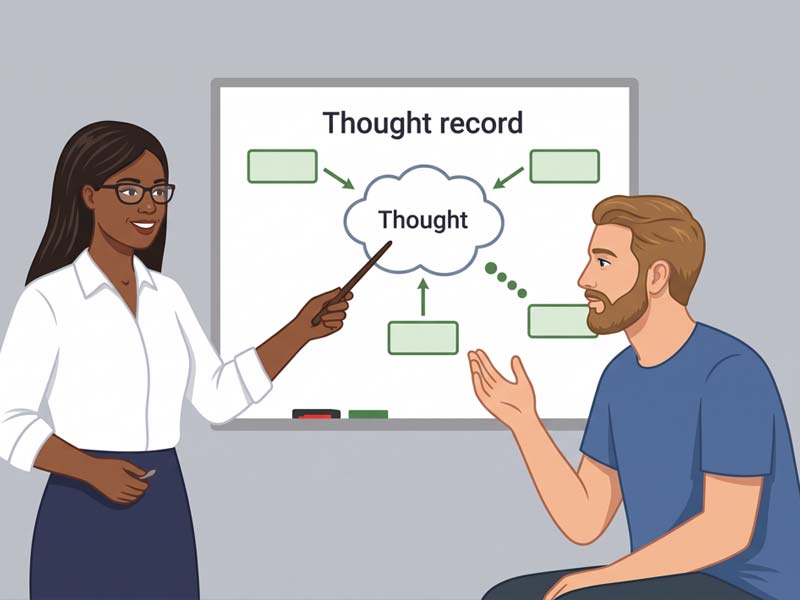
Think of CBT as a kind of mental training. Just like exercising builds muscle, CBT strengthens the way your brain handles stress, triggers, and emotions.
The foundation of CBT is simple but powerful: your thoughts, emotions, and behaviors are connected. Change one, and the others begin to change too.
When you start to notice negative or distorted thoughts — “I’ll never get better,” “I can’t handle this without using,” “I always mess things up” — CBT helps you challenge those thoughts and replace them with more balanced, truthful ones. You don’t just talk about problems. You learn how to think differently and act differently.
CBT is practical, structured, and focused on the present moment. Instead of spending years analyzing your past, you focus on what’s happening now and what you can do to move forward.
At Invicta Recovery Center, CBT is a core part of both our substance use and mental health programs. We combine this approach with compassion, community, and evidence-based care to help you find lasting recovery.
Call or text Invicta Recovery Center now at (626) 669-6547 for confidential help and compassionate guidance.
How CBT Supports Addiction Recovery
Recovery is not just about putting substances down. It’s about understanding why you reached for them in the first place.
CBT helps you:
1. Identify Triggers
You’ll learn to recognize the thoughts, emotions, people, and situations that make you want to use. Triggers might include stress, loneliness, boredom, or conflict. Once you spot them, you can prepare and respond differently.
2. Challenge Cravings
CBT teaches you to pause and question your urges:
- What am I really feeling right now?
- What do I think using will do for me?
- What else could I do to handle this feeling?
Over time, cravings lose their power.
3. Replace Destructive Thoughts
You’ll start catching the thoughts that sabotage your recovery — like “just one drink won’t hurt” or “I already messed up, so why bother?” — and learn to reframe them in ways that keep you grounded and motivated.
4. Build Healthier Coping Skills
Instead of reaching for a substance when life gets hard, CBT helps you build new tools: journaling, deep breathing, calling support, or problem-solving. These skills make it easier to stay sober long-term.
5. Prevent Relapse
CBT is one of the strongest evidence-based therapies for relapse prevention. By understanding your triggers and your thought patterns, you can see warning signs early and respond before things spiral.
At Invicta, we often say: “Awareness leads to choice.” CBT gives you that awareness and the freedom to choose differently.
CBT and Mental Health
CBT isn’t just for addiction. It’s a cornerstone treatment for a wide range of mental health conditions, including:
- Depression
- Anxiety
- Trauma and PTSD
- Panic Attacks
- Bipolar Disorder
- Obsessive-Compulsive Disorder (OCD)
- Phobias
- Stress and Burnout
For many people, mental health challenges and addiction are deeply linked. Unmanaged anxiety or depression can make recovery feel impossible. CBT addresses both sides of that equation, helping you heal emotionally and stay sober.
Through CBT, you’ll learn how your thoughts influence your moods and behaviors. For example:
Thought: “I’ll never be good enough.”
Feeling: Hopeless, sad, ashamed
Behavior: Isolation, using, or giving up
Now, with CBT, you can learn to shift that cycle:
New Thought: “I’ve made mistakes, but I’m still learning.”
Feeling: Encouraged, self-compassionate
Behavior: Reaching out for help, staying engaged, taking action
This is the heart of recovery — learning that your thoughts don’t control you. You have the power to change the story.
What a CBT Session Looks Like
If you’ve never done therapy before, it’s normal to feel nervous. But CBT is refreshingly straightforward. Here’s what you can expect during sessions at Invicta Recovery Center:
Goal Setting: You and your therapist identify what you want to work on — like managing anxiety, staying sober through stress, or building confidence.
Identifying Patterns: Together, you examine recent situations where you felt triggered, upset, or tempted. What were you thinking? What did you do next?
Challenging Negative Thoughts: Your therapist helps you spot thinking traps, like:
- All-or-nothing thinking (“If I slip once, I’m a failure”)
- Overgeneralizing (“Nothing ever works out for me”)
- Mind reading (“Everyone’s judging me”)
- Catastrophizing (“If this doesn’t work, my life is over”)
Replacing with Healthier Thoughts: You practice reframing — creating new thoughts that are realistic, compassionate, and empowering.
Behavioral Experiments: You test out new actions in real life. For instance, if you believe “I can’t handle stress without using,” your therapist may help you practice alternative coping strategies.
Homework Between Sessions: CBT often includes simple homework — like tracking your thoughts, writing a gratitude list, or practicing relaxation exercises.
It’s active, goal-oriented, and collaborative. You’re not just talking — you’re learning tools you can actually use outside of therapy.
Real-Life Benefits of CBT in Recovery
CBT isn’t just about theory — it creates real change. Here’s how people often describe their experience after several weeks or months of CBT:
- “I finally understand why I do what I do.”
- “I don’t spiral as easily anymore.”
- “I feel like I can handle stress without numbing out.”
- “I catch my negative thoughts before they ruin my day.”
- “I’ve learned how to calm myself down instead of reacting.”
Research backs this up. CBT has been shown to:
- Reduce relapse rates in people with substance use disorders
- Improve mood, focus, and emotional control
- Lessen symptoms of anxiety and depression
- Increase motivation for recovery
- Help individuals rebuild healthy habits and relationships
At Invicta Recovery Center, we witness these transformations every day. With the right tools, compassion, and consistent support, people don’t just stop using — they start thriving.
Have questions? Call or text us today at (626) 669-6547.
Frequently Asked Questions About CBT
Q: Is CBT only for addiction?
No. CBT is used to treat a wide range of conditions — depression, anxiety, trauma, stress, OCD, and more. It’s also a top therapy for people with co-occurring disorders (mental health and substance use).
Q: How long does CBT take?
It varies. Some people notice improvement in a few weeks; others continue therapy for several months. At Invicta, your therapist will personalize the timeline based on your goals.
Q: What if I’ve relapsed before — will CBT still help?
Absolutely. CBT actually shines in relapse prevention. It helps you understand why it happened and how to prevent it next time, without judgment or shame.
Q: Is CBT covered by insurance?
Most insurance plans cover evidence-based therapies like CBT. Invicta’s team can help you verify coverage and walk you through options.
Q: Do I need to have “deep” psychological problems for CBT to help?
Not at all. CBT helps anyone who wants to improve their thoughts, emotions, and behaviors — even if you just feel stuck, stressed, or disconnected.
The Invicta Approach: Real People, Real Recovery
At Invicta Recovery Center in Altadena, California, we believe in treating the whole person — not just the diagnosis. Our team combines modern therapies like CBT with compassion, community, and real-world support.
When you work with us, you’re not just getting therapy — you’re getting a partner in your recovery journey.
We’ll help you:
- Build emotional resilience
- Develop healthy coping skills
- Strengthen self-awareness and self-confidence
- Reconnect with loved ones
- Create a clear plan for long-term wellness
If you’re ready to start thinking differently, healing deeply, and living freely, we’re ready to help. You don’t have to do it alone.
Call Invicta Recovery Center now at (626) 669-6547 for confidential help and compassionate guidance.